
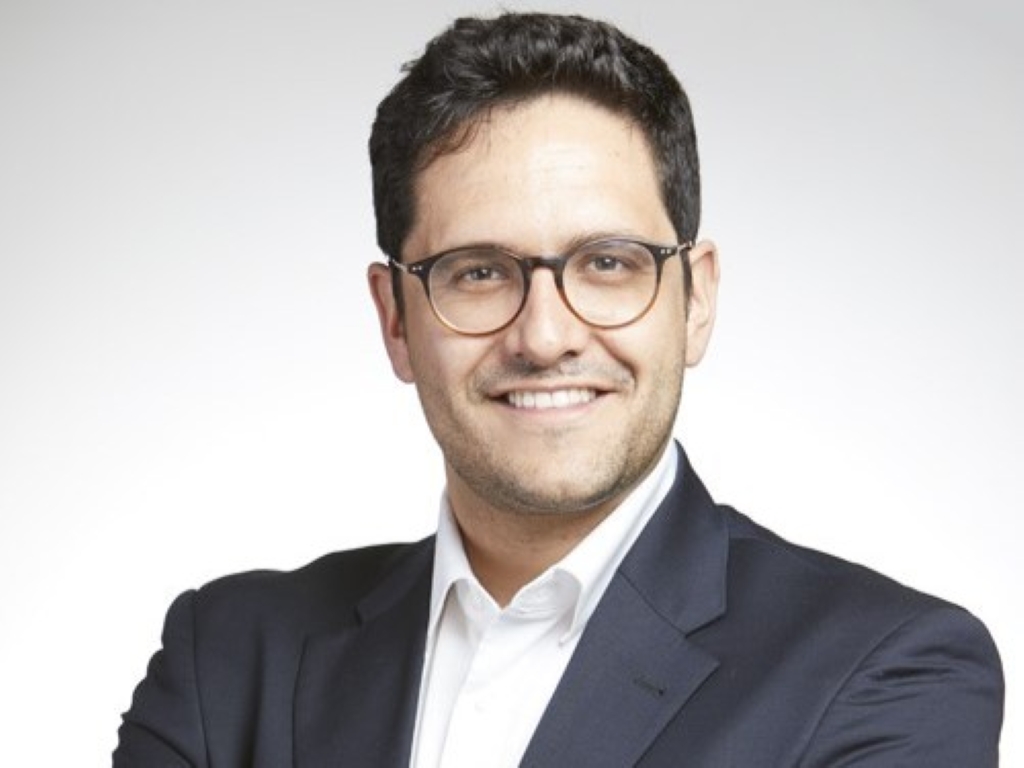
Some might say that artificial intelligence isn’t exactly rocket science, and Dr. Chris Mansi, the Chief Executive Officer and Founder of Viz.ai, would probably agree, but not for the reason you think. It’s not because it’s simple, but because he’d likely say it’s far more like brain surgery, and if so, he would know.
A neurosurgeon by training, the Newcastle, England-born Mansi attended Cambridge University before moving to Stanford to pursue an MBA in 2014. His medical work—the aforementioned brain surgery—had put him at the forefront of medical technology, and as he started pulling harder and harder on that thread, he realized that health tech innovation was the field for him. And if you’re chasing innovation, where better to do it than Palo Alto?
It was at Stanford that the idea for Viz.ai came to him, as was recalled in a 2024 profile. Working in the Stanford Biodesign program, he was working on addressing deep vein thrombosis when it dawned on him that, in time-sensitive conditions, finding the exact specialist one needed would be near impossible. When every second counts, he realized that he could leverage AI to reduce the time to treatment.
With that, he was off, and he ended up founding Viz.ai immediately upon graduation. In the earliest AI days, however, it wasn’t easy to convince people about the merits of the technology in healthcare. Fortunately for him, Mansi excels at difficult tasks and overcame governmental skepticism to get his business off the ground.
When he was making the pitch to the FDA, he was faced with skepticism about AI’s potential to improve patient outcomes in a regulatory environment that lacked clear precedents. The agency’s approval served as a step toward broader adoption, not merely a testament to the technology’s value.
The former CEO of Google, Eric Schmidt, was so impressed with Mansi’s work that he decided to seed fund the company. His gamble paid off, as the FDA approved Viz.ai’s stroke algorithm—which both detects the event and alerts the hospital—in 2018, making it the first approval of its kind.
Since then, Mansi has expanded Viz.ai’s capabilities to boast 13 FDA-approved algorithms to help with heart, lung, and brain conditions, and his work has drawn serious attention: he was named to Time magazine’s AI100 in 2024 alongside luminaries like Nvidia CEO Jensen Huang and actress Scarlett Johansson. That’s good company.