
BiVACOR, a clinical-stage medical device company, announced that its Total Artificial Heart (TAH) has received Breakthrough Device Designation from the U.S. Food and Drug Administration. This recognition supports the TAH as a potential bridge to transplant for patients with severe biventricular or univentricular heart failure who are not candidates for other mechanical support devices. The designation follows promising early results from BiVACOR’s FDA Early Feasibility Study, where five patients received the device between July and November 2024. With no device-related complications reported, the FDA has approved an expansion to include 15 additional patients later in 2025.
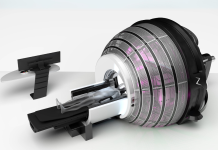
BiVACOR’s TAH introduces a new approach to artificial heart technology, using a magnetically levitated, dual-sided rotor to power both sides of the circulatory system. This design reduces mechanical wear and supports a natural, pulsatile flow. Its compact form fits a wide range of patients and is designed for long-term support. According to William Cohn, MD, BiVACOR Chief Medical Officer and heart surgeon at the Texas Heart Institute, “The early results are remarkable with no strokes, no device-related complications, and a safety profile unlike anything in this space. With Breakthrough status in hand, we’re entering the next phase with the wind at our backs and real momentum to bring this to more patients.” While the TAH remains investigational and not yet available for commercial use, the Breakthrough status is expected to accelerate its regulatory progress and bring it closer to broader clinical application.