
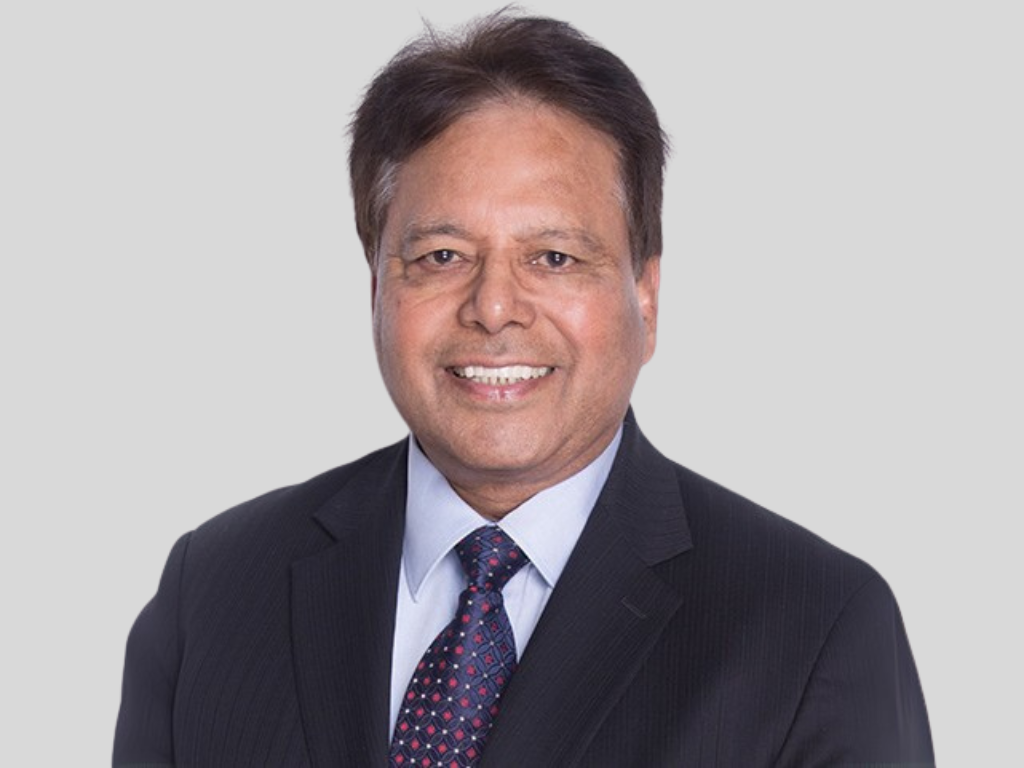
Dr. Sudhir Srivastava, quite simply, wants to make surgeries cheaper. Through SS Innovations, he’s doing exactly that. A board-certified cardiothoracic surgeon known globally for his record-setting robotic procedures, Srivastava had spent decades at the forefront of minimally invasive surgery. But in 2013, that trajectory shifted. After witnessing a patient’s family unable to afford a life-saving surgery, Srivastava made a decision: he would stop practicing, return to India, and build a surgical robot from scratch—one affordable enough to serve everyone.
The patient never came back, and the experience stuck with him. “To be honest, it still haunts me,” he said. What followed was an audacious attempt to change the economics of surgery. With no external funding, Srivastava sold his car, his furniture, and poured his $4.5 million in savings into R&D.
When a collaboration in Germany fell through, he came home and started again with a team of 10 engineers, working out of his own house. The result was the SSI Mantra, India’s first indigenously developed surgical robot—designed not for luxury hospitals, but for widespread access. Since its commercial debut, it’s been used in more than 500 procedures and installed everywhere from Dubai to Johns Hopkins.
The stakes are personal for Srivastava, who has performed more robotic heart procedures than anyone in the world. His background spans decades in U.S. hospitals, including a tenure at Alliance Hospital in Texas, where he performed the world’s first single-, double-, triple-, and quadruple-vessel beating-heart TECAB procedures. But that record is not what motivates him now. “Depth, precision, and safety,” he says, are the reasons to push robotic surgery forward. SSI Mantra 3, the latest iteration, features a head-tracking safety system, 3D 4K imaging, and modular robotic arms designed for ergonomic control and specialty-specific procedures. But the most radical part of Srivastava’s vision isn’t the tech. It’s putting that tech in a truck and driving it into villages where surgeons rarely go.
His goal is to decentralize surgical excellence, and he’s doing it with the same relentlessness that once led him to sell everything he owned. “Fueled by a vision,” he said, “my goal was to create something for my country, making essential healthcare accessible to all.” For Srivastava, the mission is no longer just to advance surgery, but to make sure no one is left behind by it.